The short answer
The best lubricant for a penis pump seal is the type specified by the device manufacturer. Many medical vacuum erection device instructions use a water-soluble or water-based lubricant because it creates a thin body-side seal and rinses away easily. That does not make every water-based formula compatible with every sleeve, gasket, O-ring, cylinder, valve, or sensor. Check the manual, use a small even amount, keep it away from ports unless directed, and stop if the product causes burning, swelling, numbness, or material changes.
Lubricant has two jobs in a pump setup. It reduces drag where skin meets the opening, and it fills tiny air channels at the body-side contact surface. It should not act as glue, a crack repair, a filler for the wrong seal size, or a way to compensate for a damaged gasket.
The formula also touches several materials at once. A pump may combine a rigid polycarbonate or acrylic-style cylinder, a silicone or rubber-like sleeve, separate O-rings, flexible tubing, valve components, and an electronic pressure port. A lubricant that feels comfortable on skin can still leave residue, swell an elastomer, cloud a plastic, or migrate into a valve when the manual does not allow it.
This guide gives you a compatibility decision process. For a complete leak diagnosis, use our vacuum troubleshooting sequence. If the opening itself feels wrong, review the cylinder and seal sizing guide before adding more gel.
Quick comparison by lubricant type
| Lubricant type | Potential advantage | Compatibility question |
|---|---|---|
| Water-soluble or water-based | Common in VED instructions, easy to spread, usually easy to rinse | Does the manual name a required formula, viscosity, or ingredient restriction? |
| Silicone-based | Longer-lasting slip in some applications | Does the maker permit it on the exact silicone, elastomer, plastic, and valve parts? |
| Oil or petroleum-based | Thick texture and slow evaporation | Can it affect sleeves, O-rings, plastics, condoms, rings, cleaning, or sensor paths? |
| Hybrid formula | Combines water and silicone ingredients | Is each component approved for every contacted material? |
| Warming, cooling, scented, or numbing | Sensory effect | Can added ingredients hide warning sensations or irritate vacuum-exposed skin? |
The table is a screening tool, not a universal material chart. Two sleeves that both look like silicone may use different grades, fillers, coatings, and curing systems. The device instructions and approved replacement parts remain the controlling source.
Why water-soluble lubricant is the usual starting point
Some clinical vacuum erection device patient materials advise a water-soluble lubricant as part of setup. Treat that as device-specific guidance rather than permission to use any water-based formula in any consumer pump. Start with the exact lubricant type named by your device instructions.
Water-soluble products are practical because a thin film can bridge small dry channels and then rinse away during cleaning. They also make it easier to inspect whether a sleeve is folded, torn, tacky, swollen, or permanently distorted. Heavy residue can hide those changes.
Look beyond the front label. "Water-based" can cover thin liquids, thick gels, hybrid formulas, high-glycerin products, fragrances, preservatives, warming agents, cooling agents, and anesthetic ingredients. Choose the simplest formula that the device permits and that your skin tolerates.
A five-part compatibility check
1. Read the device instructions first
Find the exact lubricant wording in the operating and cleaning sections. Note whether the maker says water-based, water-soluble, supplied lubricant only, a named product, or no lubricant on certain joints. Also check whether the device uses water in the cylinder, because a hydropump may have a different fill and valve sequence from an air pump.
If the instructions are missing, ask the manufacturer or seller for the current manual for your model. Do not rely on marketplace answers that combine several products under one listing. A change in motor head, sleeve, valve, or O-ring can change the compatibility rule.
2. Map every surface the lubricant can reach
The intended location is usually the body-side contact surface, not every joint. Trace where the product can move when vacuum is created. It may be drawn toward the cylinder, sleeve groove, release valve, pressure port, or tubing connector. Keep lubricant away from electronics, charging contacts, motors, vents, and sensor openings unless the manual explicitly directs otherwise.
Check removable rings and condoms separately. Their material instructions may differ from the pump sleeve. A product that is approved for the cylinder seal is not automatically approved for every accessory used in the same session.
3. Compare the lubricant and material instructions
Read both labels. If the device says "water-soluble only" and the lubricant contains silicone or oil, it does not meet that instruction even if the front label emphasizes water. If the lubricant maker lists exclusions for silicone products, latex, polyurethane, polycarbonate, acrylic, or elastomers, follow those exclusions.
Avoid blanket internet rules such as "silicone lubricant always damages silicone" or "all water-based gel is safe for plastic." Compatibility depends on formulation, contact time, cleaning, temperature, and the exact material. When either side is unclear, use the supplied lubricant or obtain written compatibility guidance.
4. Check skin comfort without hiding feedback
Vacuum changes how skin is loaded, so a product that merely tingles during ordinary use may feel much stronger inside a seal. Choose an unscented, non-numbing formula when the device allows it. Numbing ingredients can reduce the feedback that helps you notice pinching, burning, or excessive pressure.
Apply only to clean, intact skin. Stop and rinse if you develop burning, rash, swelling, blistering, or persistent redness. Repeated irritation deserves a clinician's review, especially when there is broken skin, infection, a new lesion, bleeding, or pain that continues after the product is removed.
5. Confirm clean removal
A compatible setup should also be maintainable. Follow the device cleaning method and confirm that the lubricant rinses from sleeve folds, O-ring grooves, the cylinder rim, and any permitted removable connector. Residue can trap lint, alter friction, make a sleeve slide, or form a path into a valve.
Do not use alcohol, bleach, household degreaser, essential oil, or solvent unless the manufacturer names it. Strong cleaners can create their own material and skin problems. Dry the parts as directed before storage and keep seals relaxed rather than crushed under a threaded joint.
How much lubricant creates a good seal?
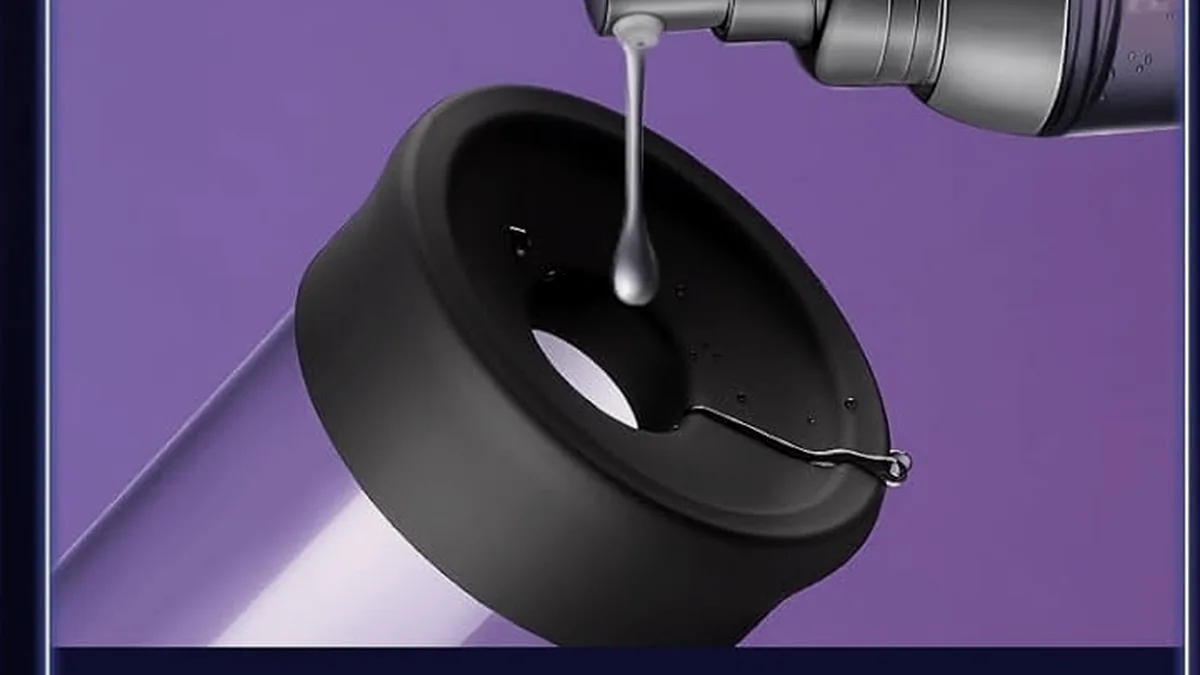
Start with a thin, continuous film at the body-side opening and any additional location specified in the manual. The goal is an even contact layer, not a mound. Spread it around the full circumference so one dry section does not become an air channel.
Use small additions. If gel drips into the cylinder, coats a pressure port, pools in the sleeve, or makes the base slide out of position, clean and restart with less. Too much lubricant can produce the same unstable feeling as too little because the sleeve folds or moves when the pump loads.
The thin-film test
Before the session, inspect the contact ring under good light. It should look evenly coated without gaps, clumps, or runoff. During the maker's normal setup, the seal should remain centered rather than sliding toward one edge. If stability requires a thick layer, revisit hair, angle, sleeve condition, and seal size.
Where to apply it
For many systems, lubricant belongs on the skin-contact surface or the opening where the body enters the sleeve. Some clinical VED instructions also describe applying it to the penis to ease insertion. Follow the exact sequence for your model. Keep the cylinder exterior dry enough to hold securely and keep the release control clean and accessible.
Do not coat threaded joints, hose barbs, electrical contacts, charge ports, vents, or gauge openings unless the manual names that location. If a connector leaks, lubricant is not a durable repair. Reseat or replace the approved gasket, O-ring, tube, or fitting.
Why a lubricated seal can still leak
Lubricant cannot correct every geometry problem. Hair can cross the contact ring. The sleeve can fold under itself. A seal may be too large for the contact area, while the cylinder is still too narrow internally. A gasket can look smooth but have a fine tear. A chamber can also leak at the valve or connector rather than the body.
Use a one-change troubleshooting sequence:
- Release pressure and clean the seal, rim, and permitted removable parts.
- Inspect for tears, permanent waves, swelling, stickiness, stiffness, or discoloration.
- Reinstall the seal evenly and confirm the correct orientation.
- Apply a thin film of the approved lubricant around the contact surface.
- Align the cylinder without forcing one edge into the body.
- If the approved setup still leaks, inspect the valve, tubing, connector, and chamber rather than adding more lubricant.
Special case: water pumps and condensation
A water-based pump uses fluid as part of the operating environment, but that does not mean every water-based lubricant belongs inside every port. Fill level, trapped air, body angle, valve direction, and drainage sequence affect performance. Follow the model's water temperature, fill, release, and cleaning instructions.
After use, remove water and lubricant from the approved paths. Condensation near a digital sensor or motor head can produce unstable readings, corrosion, or delayed faults. Do not store the device wet or charge it until the instructions say the relevant surfaces are dry.
Products and practices to avoid
Protect the seal, device, and skin
- Do not use soap, shampoo, shaving cream, lotion, or household oil as a substitute lubricant.
- Do not use numbing gel to make higher pressure feel comfortable.
- Do not mix formulas in the bottle or on the seal to change thickness.
- Do not use expired, separated, contaminated, or strongly discolored product.
- Do not use lubricant to hide a crack, torn sleeve, loose valve, or wrong-size opening.
Release pressure immediately for pain, sharp pinching, numbness, marked coldness, blistering, bleeding, or rapidly darkening color. The NIDDK describes vacuum erection devices as systems that pull blood into the penis and may include an elastic ring to maintain an erection. Hardware setup and tissue response are different issues; a clinician or urologist should assess repeated symptoms or ongoing erection problems.
Buying checklist for lubricant and spare seals
- The lubricant type matches the exact device manual.
- The ingredient list is complete and easy to read.
- The formula has no numbing effect and no unnecessary warming or cooling additives.
- The bottle can dispense a small controlled amount without contaminating the opening.
- Cleaning instructions are compatible with the sleeve, cylinder, rings, valves, and sensor path.
- Replacement seals and O-rings are identified by model rather than appearance alone.
External penile rigidity devices, including vacuum pumps and constriction rings, are identified in 21 CFR 876.5020 as Class II devices subject to special controls. The classification does not establish that a particular online product is cleared or that a lubricant is compatible. Product-specific documentation still matters.
The TopMan Premium Vacuum Pump System page shows the current $199 offer, included course, and actual product configuration. Use its supplied instructions and support path for model-specific setup questions.
Frequently asked questions
What lubricant is best for a penis pump seal?
Start with the lubricant type specified by the device maker. Many vacuum erection device instructions call for a water-soluble or water-based lubricant because it spreads evenly and cleans away with water. Confirm compatibility with the exact sleeve, gasket, cylinder, tubing, and valve materials.
Can I use petroleum jelly on a penis pump?
Use petroleum jelly only if the device maker explicitly permits it. Oils and petroleum products can be difficult to clean and may be incompatible with some elastomers, plastics, condoms, or rings. An unapproved product can also migrate into a valve or sensor path.
Can I use silicone lubricant with a silicone pump sleeve?
Compatibility depends on both formulations. Some manufacturers prohibit silicone lubricant on silicone parts, while others allow specific products. The words silicone and silicone-compatible are not enough; follow the device and lubricant instructions for the exact materials.
How much lubricant should I use for a pump seal?
Use a thin, continuous film at the body-side contact surface and any location named in the manual. Too little can leave dry air channels; too much can make the sleeve slide or draw lubricant toward a valve. Add small amounts rather than filling gaps with gel.
Why does my penis pump leak after I add lubricant?
A leak after lubrication often comes from an uneven film, too much product, a folded sleeve, hair crossing the seal, lubricant on a connector, or a formula that makes the seal slide. Release pressure, clean the parts, inspect the fit, and rebuild the seal one variable at a time.
Choose the complete setup, not one isolated part
Review the pump, seal system, included training course, and current offer together before you decide.