The short answer
A penis pump base seal and a constriction ring do different jobs. The base seal sits between the cylinder and the body so the pump can create vacuum. A constriction ring is placed at the base after or during vacuum-erection-device use to slow blood leaving the penis and help maintain an erection. Do not substitute one for the other unless the device instructions explicitly identify that part for both purposes.
The names are easy to mix up because both parts may be soft, circular, and positioned near the body. Product listings also use overlapping terms such as sleeve, comfort insert, gasket, tension ring, and erection ring. The reliable way to identify a part is by its intended function, where it fits in the device, and what the manufacturer says to do with it.
Base seal and constriction ring compared
| Feature | Base seal | Constriction ring |
|---|---|---|
| Main job | Close the gap between cylinder and body so vacuum can build | Reduce venous outflow so an erection can be maintained |
| Location during pumping | Seated on or inside the body-side cylinder opening | Loaded on a transfer cone, cylinder base, or other position described by the device |
| After the cylinder is removed | Normally stays with the cylinder | May remain on the body only for the limited period in the device or clinician instructions |
| Fit goal | Airtight and comfortable without drawing in surrounding tissue | Enough retention for the prescribed purpose without pain, coldness, numbness, or dark color |
| Common mistake | Choosing the smallest opening and tolerating pinching | Using an improvised ring or leaving it on beyond the stated limit |
What a pump base seal actually does
A base seal is part of the vacuum path. It follows the body contour, closes small gaps, and lets the pump remove air from the cylinder. If the seal is folded, worn, poorly lubricated, too large, or sitting at the wrong angle, air enters faster than the pump can remove it. The result may look like a weak motor or faulty gauge even when the real issue is body-side contact.
The best seal is not automatically the tightest one. A smaller opening may create a quick seal while also pinching skin or pulling tissue into the cylinder. Choose the size that stays airtight at gentle vacuum and remains comfortable. Our cylinder and seal sizing guide explains how chamber dimensions and base fit work together.
What a constriction ring actually does
The NIDDK describes a vacuum erection device as a cylinder, a pump that creates vacuum, and an elastic ring that helps keep an erection. The ring is therefore part of an erectile-function workflow, not the component that creates the vacuum. Some systems let the user transfer the ring from the cylinder base to the body after sufficient rigidity is reached.
Ring size, placement, and maximum wear time are device-specific. Use only a ring intended for that system and follow its instructions or a clinician's plan. Remove it immediately for pain, coldness, numbness, marked swelling, blue or dark color, or difficulty removing the ring. An improvised band, cable tie, hardware gasket, or base seal is not a safe replacement.
A ring is not a pressure-control feature
A constriction ring does not make high vacuum safer. Build vacuum gradually, keep the release control within reach, and release immediately if sensation or color changes. The ring and the pump each add a separate variable that must be controlled.
Can one silicone part perform both jobs?
Only when the product documentation clearly says so and provides instructions for both functions. Shape and softness alone do not prove interchangeability. A broad flared seal designed to stay attached to a cylinder may distribute contact pressure very differently from a ring designed to retain blood. Stretching a seal off the cylinder can also damage it and create a leak during the next session.
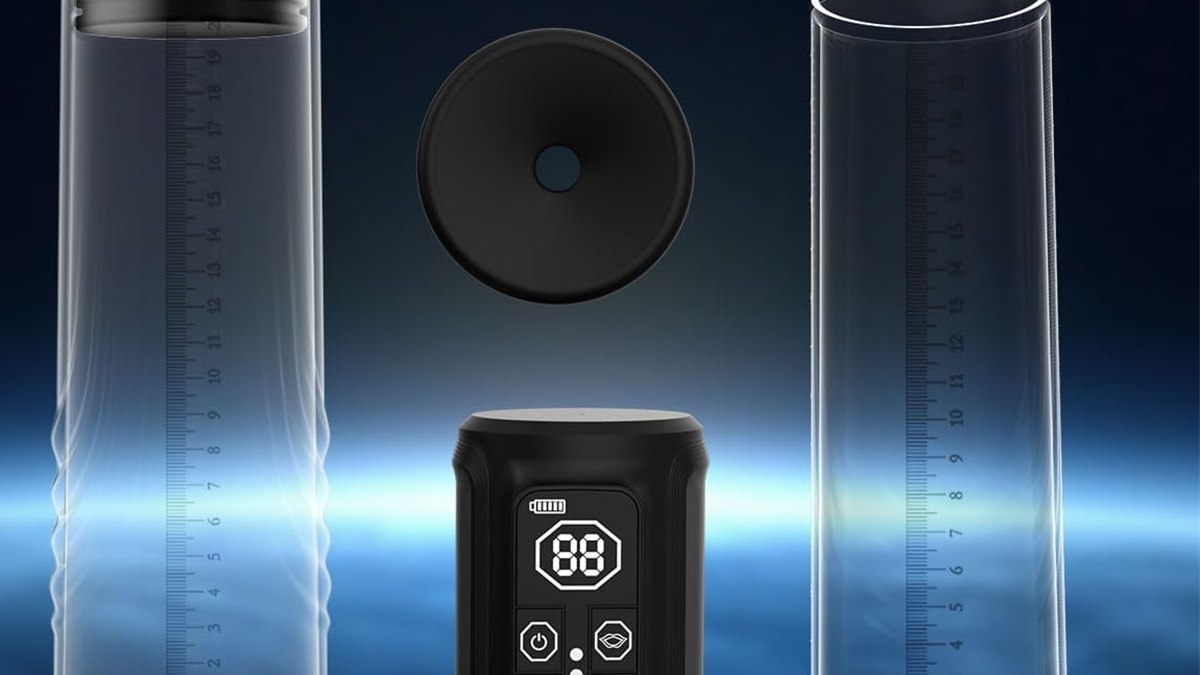
The three S/M/L pieces included with the current TopMan pump are described as body-side seals. They are used to tune fit at the cylinder opening and are not presented as erection-maintaining constriction rings. Customers who need a medical VED and tension-ring workflow should choose a system documented for that purpose and discuss the plan with a clinician when appropriate.
How to identify the parts in your kit
- Read the parts diagram. Look for the exact names used in the manual rather than relying on a marketplace title.
- Check where the part locks in. A base seal usually seats on the cylinder opening; a ring may load onto a cone or transfer surface.
- Check the removal sequence. Instructions should state whether the part remains on the body after the cylinder is released.
- Find a stated time limit. A part intended for constriction should come with explicit wear and removal guidance.
- Verify replacements. Use the model number and approved dimensions. A similar-looking ring can have different elasticity.
Symptoms that point to the wrong component or fit
| What happens | Likely issue | Next step |
|---|---|---|
| Vacuum never builds at the body | Base seal contact, valve, connector, or cylinder leak | Release, reseat, and use the vacuum leak checklist |
| The seal leaves a sharp groove | Opening too tight, seal folded, or pressure rising too fast | Stop, restore normal sensation and color, then reassess size |
| Erection falls after the cylinder is removed | No retention ring, unsuitable ring, or a different ED cause | Do not improvise; use a documented VED workflow or seek clinical advice |
| Coldness, numbness, or dark color with a ring | Excess constriction or wear time | Remove immediately and seek care if normal appearance does not return promptly |
Buying checklist
- A labeled parts diagram that distinguishes seals, sleeves, and tension rings.
- Internal cylinder dimensions and a manufacturer-specific fit chart.
- An immediate manual pressure release that remains reachable during use.
- Separate cleaning instructions for washable and powered parts.
- Replacement part numbers, material compatibility, and return restrictions.
- Clear tension-ring instructions if erectile-function support is the goal.
Bottom line
The base seal makes the pump airtight; the constriction ring helps maintain an erection. Treating those parts as interchangeable creates both performance and safety problems. Identify each component from its documented function, use the correct size, and stop when comfort, color, temperature, or sensation changes.
Frequently asked questions
Is a penis pump base seal the same as a cock ring?
No. A base seal helps the cylinder create vacuum. A constriction or erection ring is designed to slow blood leaving the penis after vacuum is created. Only use a part for both jobs if the device instructions explicitly say it is designed for both.
Can I leave a pump seal on after removing the cylinder?
Normally the base seal stays with the cylinder. Do not leave it on the body as a retention ring unless the manufacturer specifically identifies it as a constriction ring and provides wear-time and removal instructions.
Why are three silicone seals included with some pumps?
Different seal openings help users match body-side fit. They adjust contact at the base; they do not create three different cylinder diameters and they are not automatically constriction rings.
Why does the seal pull in surrounding skin?
The opening may be too wide, the seal may be uneven, lubricant may be excessive, the cylinder angle may be poor, or vacuum may rise too quickly. Release immediately, reposition, and stop if tissue remains trapped or painful.
When should I stop using a constriction ring?
Remove it immediately for pain, coldness, numbness, marked swelling, blue or dark color, bleeding, or difficulty removing it. Follow the device or clinician limit and seek medical care if normal appearance and sensation do not return promptly.
Sources and further reading
- National Institute of Diabetes and Digestive and Kidney Diseases. Treatment for erectile dysfunction.
- Electronic Code of Federal Regulations. 21 CFR 876.5020 - External penile rigidity devices.
- National Health Service. Erectile dysfunction: causes and treatments.
- The Ohio State University Wexner Medical Center. Patient education on vacuum erection device use.
Choose the seal by fit, not by force
See the TopMan system's clear cylinder, three S/M/L body-side seals, controlled release, current $199 price, and included training course.
Explore the pump system