The short answer
An electric penis pump uses a powered mechanism to create or manage vacuum, while a manual pump relies on hand action such as a bulb, handle, or lever. Electric models can reduce repeated hand work and may add a display or programmed behavior. Manual models can be simpler, quieter, and independent of charging. Neither is automatically more controlled. The best choice has a reliable immediate release, understandable feedback, comfortable fit, maintainable parts, and instructions that match its intended use.
The powered-versus-manual decision is separate from the water-versus-air decision. An electric device can still have a wet or dry workflow, and a manual device can also use water or air. Compare the medium in the water pump versus air pump guide, then use this article to choose how you want vacuum to be generated and controlled.
What counts as manual or electric?
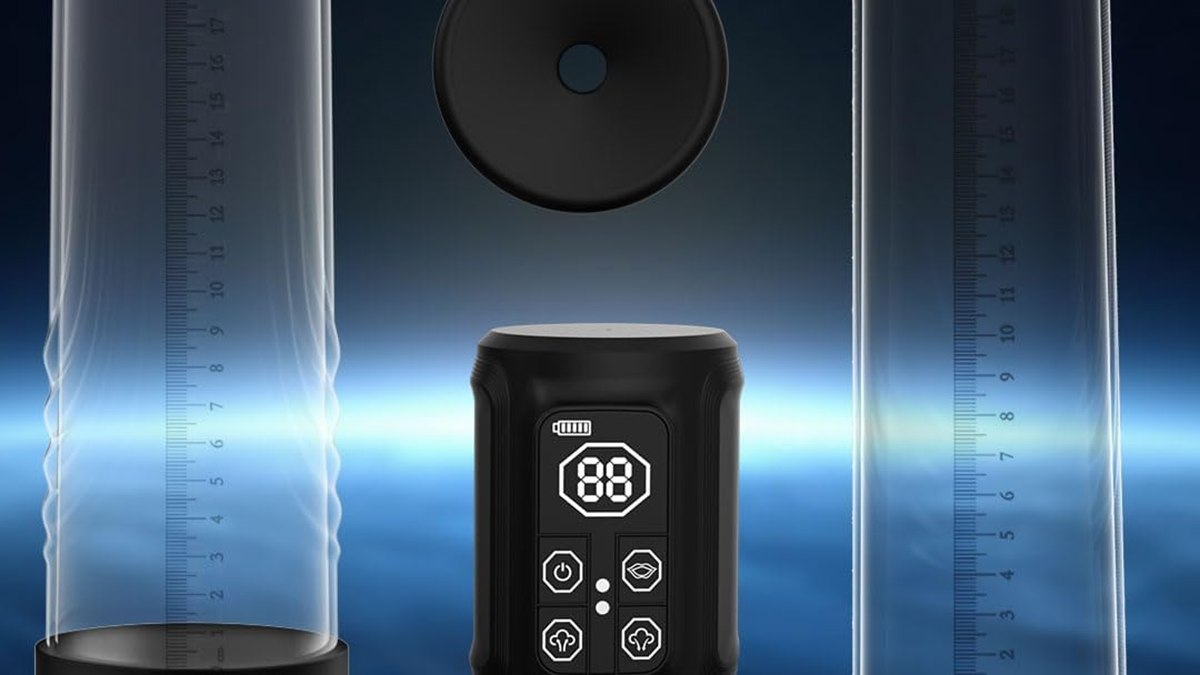
A manual pump creates vacuum only when the user operates a bulb, piston, handle, lever, or similar mechanism. The user controls the timing of each action directly. An electric pump uses a motor or powered control head. Depending on the exact model, it may offer buttons, modes, a display, pauses, or automatic behavior, but those features must be verified in the current manual rather than assumed from a product photo.
A digital screen does not prove that the device measures pressure accurately, and a hand bulb does not prove that pressure rises gently. The pressure path, chamber, valve, seal, release, and instructions work as a system.
Electric penis pump vs manual pump at a glance
| Decision point | Electric pump | Manual pump |
|---|---|---|
| Vacuum source | Motor or powered control unit | Hand bulb, piston, handle, or lever |
| Hand effort | Lower repeated hand effort after setup | Each pressure change requires direct hand action |
| Feedback | May include a display or programmed behavior; documentation still matters | May include an analog gauge or rely on tactile feedback and a documented sequence |
| Power needs | Battery state, charging method, and storage all matter | No battery or charger required |
| Noise | Motor sound varies by model and mode | Usually quiet apart from valve or bulb sounds |
| Maintenance | Adds battery, motor, display, seals, ports, and electronics to inspect | Usually fewer powered parts, but bulbs, hoses, gauges, and valves still wear |
Control is about the release, not the number of buttons
Product pages often describe multiple modes as if more settings equal better control. The first control to verify is the pressure release. It should be easy to identify, reachable during use, and explained in the manual. You should know how to stop powered action and how to release existing vacuum if the display, motor, or battery behaves unexpectedly.
Manual systems also need a dependable release. A bulb that stops pumping is not the same as a valve that releases pressure already inside the chamber. Before first use, operate the release at rest and confirm that the device returns to its documented baseline state.
Displays and gauges are feedback, not protection
An electric pump may show a number, icon, battery state, or mode. A manual pump may use an analog gauge. Either can be useful when the units, normal range, reset behavior, and error states are documented. Neither can monitor color, temperature, comfort, sensation, or tissue being drawn into the base.
Do not continue because the number appears low when the body shows a warning sign. If a gauge or display remains at zero while vacuum changes, freezes, or fails to return to rest, release fully and follow the gauge troubleshooting guide.
Consistency and hand effort
A powered mechanism may help a user who has limited grip strength or wants less repeated hand motion. That benefit depends on button placement, pause behavior, release access, and whether the powered unit can make small, understandable changes. A motor that rises too quickly or resumes unexpectedly is not an advantage.
A manual pump gives direct control over each action and does not depend on battery state. It also places the burden of pacing on the user. Squeezing repeatedly, chasing a gauge number, or using a long lever aggressively can increase vacuum faster than intended. Conservative technique matters in both categories.
Noise, privacy, and portability
Electric models may produce a motor sound. Ask whether the current manual or reviews describe the sound in the actual mode you plan to use, but do not treat a marketing claim such as silent as a measured specification unless a test method is supplied. Manual models are usually quieter but may include a hose, bulb, and gauge that take more packing space.
Travel adds practical questions: can the device be locked against accidental activation, does the battery require special handling, does the charger work at the destination, and can every part be packed clean and dry? A manual model avoids charging, while an electric model may reduce the number of separate pump components. Compare the complete kit, not just the cylinder.
Charging and battery behavior
For an electric pump, verify the charging connector, supplied cable, indicator states, charging environment, and storage instructions. Keep unapproved chargers and moisture away from the powered head. A battery icon should have a defined meaning; it should not be interpreted from appearance alone.
Plan for a low-battery condition before use. The manual should explain whether the device stops, holds, or releases vacuum when power is interrupted. If that behavior is absent from the documentation, ask the manufacturer before relying on the device.
Cleaning favors clear component boundaries
An electric unit adds a motor, battery, display, buttons, and charging area that may have different cleaning limits from the cylinder and seals. Do not submerge a powered component unless the manufacturer explicitly rates that exact assembled part for immersion and provides instructions. A manual bulb, gauge, and hose also may need to stay dry.
The easiest system to maintain separates washable skin-contact parts from protected components and provides replacement part numbers. Use the component cleaning and drying checklist before deciding that either category is low maintenance.
Fit still matters more than the pump mechanism
A powerful motor cannot repair a poor body-side seal, and repeated hand pumping cannot compensate for a damaged valve. Confirm the internal cylinder dimensions, seal opening, release path, and replacement parts. The correct base fit holds at gentle vacuum without sharp pressure, trapped skin, or surrounding tissue being drawn into the chamber.
If vacuum forms and then falls, release and test the seal, connector, valve, hose, and cylinder in order. The vacuum leak guide prevents the common mistake of blaming the motor or adding more manual strokes before checking the pressure path.
Intended use and evidence
NIDDK and NHS describe vacuum devices as options for erectile dysfunction. The federal classification for external penile rigidity devices addresses a specific medical device context. A consumer electric or manual pump may have a different intended use, accessories, and evidence. A constriction-ring workflow should come from a documented VED system or clinical plan, not from substituting a base seal or improvised band.
The stop rule does not change with the power source
Release immediately for pain, numbness, coldness, blue or dark color, bleeding, rapid swelling, or trapped tissue. Ask a clinician before use when you take anticoagulants, have a bleeding disorder or reduced sensation, or are recovering from pelvic, prostate, or penile surgery.
Buyer checklist
- A release control that works independently of adding more vacuum.
- Clear indicator units, reset behavior, and power-loss behavior when electronics are used.
- Published internal cylinder dimensions and body-side seal options.
- Cleaning limits for the cylinder, seals, hose, gauge, motor, and charging port.
- Replacement parts for every component that can wear or be lost.
- A complete current manual available before purchase.
- Delivered price, warranty, return restrictions, and support response path.
How this supports a Bathmate-alternative decision
A search for a Bathmate alternative often mixes three decisions: brand, water versus air, and powered versus manual control. Resolve them separately. First choose the session environment, then choose the pump mechanism, and only then compare exact products by fit, release, cleaning, replacement parts, and current delivered cost.
TopMan product disclosure
The current TopMan Pro Extender Pump System costs $199 and includes one clear cylinder, three S/M/L body-side seals, controlled pressure release, a maintenance kit, and the complete Jelqing Mastery Course with 13 topic modules and 34 private lessons. Compare the current product manual and verified controls against the checklist above; the package facts do not establish medical clearance or predictable permanent enlargement.
Bottom line
Choose an electric pump when its powered controls, release, charging behavior, and cleaning boundaries make the routine easier to understand and repeat. Choose a manual pump when direct hand control, quiet operation, and independence from charging fit your routine better. In both cases, the dependable release, body-side fit, readable feedback, maintainable pressure path, and conservative technique matter more than the power source.
Frequently asked questions
Is an electric penis pump better than a manual pump?
Neither category is universally better. Electric pumps can reduce repeated hand effort and may add feedback, while manual pumps can be simpler, quieter, and independent of charging. Release design, fit, control, and maintenance decide the better match.
Are electric penis pumps more powerful?
Power is not a useful buying goal by itself. Chamber size, seal, valve, control logic, and technique all affect vacuum. Choose understandable gradual control and an immediate release instead of the strongest marketing claim.
What happens if an electric penis pump battery runs out?
The behavior is model-specific. The manual should explain whether the device stops, holds, or releases vacuum and how to use the manual release. Verify that behavior before use.
Is a manual penis pump safer because I control each squeeze?
Direct hand action can make pacing clear, but it does not create an automatic safety limit. A manual pump still needs a reliable release, comfortable fit, conservative technique, and clear stop signs.
Should I choose a pump with a digital display?
Choose a display only when its units, normal behavior, reset state, and errors are documented. A display can add feedback, but it cannot replace comfort, color, temperature, sensation, and immediate release checks.
Sources and further reading
- National Institute of Diabetes and Digestive and Kidney Diseases. Treatment for erectile dysfunction.
- Electronic Code of Federal Regulations. 21 CFR 876.5020 - External penile rigidity devices.
- National Health Service. Erectile dysfunction: causes and treatments.
- The Ohio State University Wexner Medical Center. Patient education on vacuum erection device use.
Compare controls, fit, and support
Review the TopMan system's clear cylinder, three S/M/L body-side seals, controlled release, maintenance kit, included course, and current $199 price.
Explore the pump system